Gentle Movement for Pregnancy and Postpartum (It's Not About Bouncing Back)
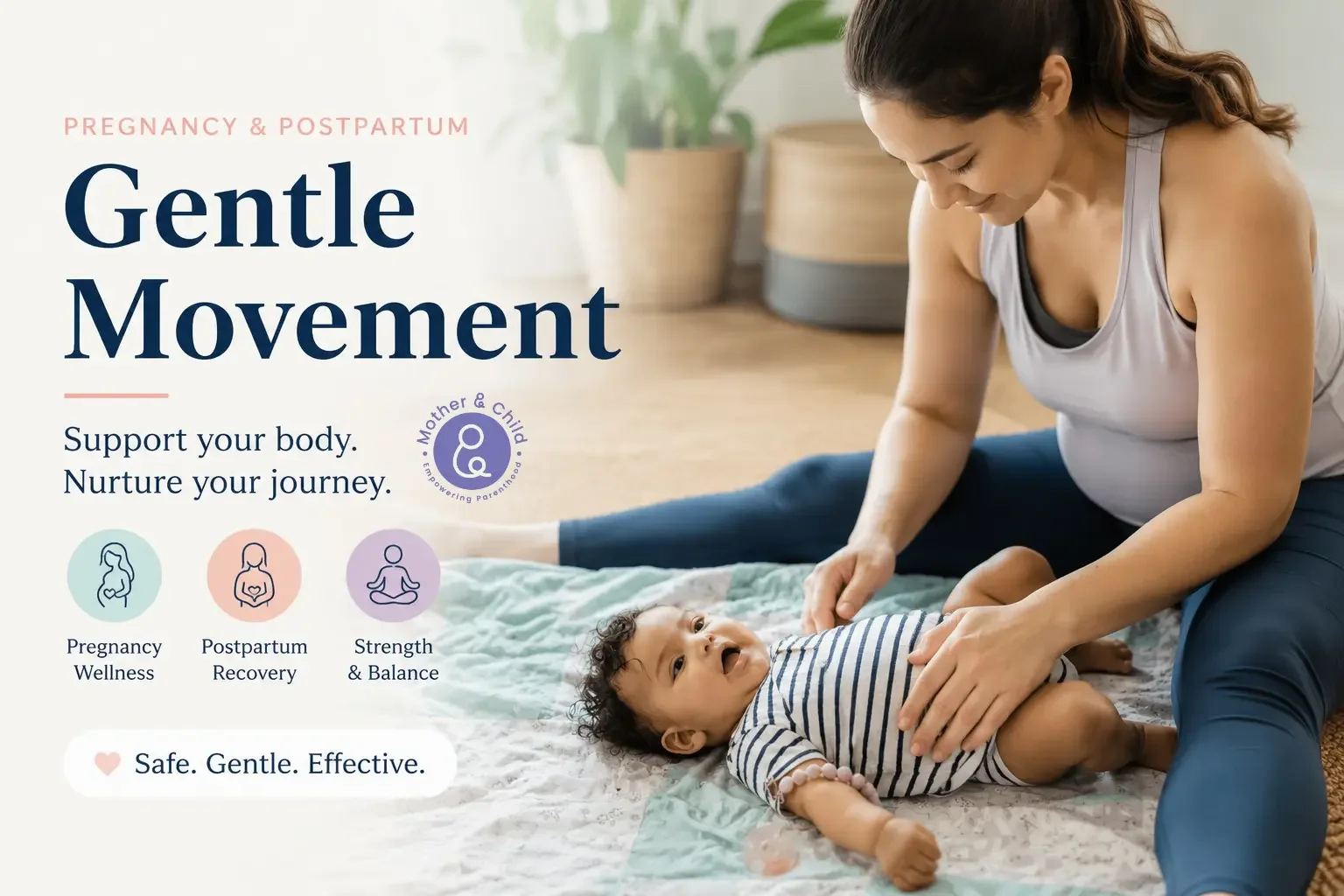
Gentle movement in pregnancy and after birth isn't about "staying fit" or "bouncing back" — it's about circulating blood and lymph, easing stiffness, softening anxiety, and slowly rebuilding trust in your body. A ten-minute walk or a slow stretch can shift your nervous system in quiet, powerful ways. You're not training. You're regulating.
Here's why movement matters most in exactly the season it feels hardest — and how to begin.
When your world quietly gets smaller
Pregnancy, and those early months of motherhood, can quietly make your world feel smaller. There's more time indoors, more sitting, more watching the clock or the phone — and more thinking, often overthinking. The days begin to blur into each other.
This is precisely when gentle movement matters most. Not to chase a body goal, but to circulate blood and lymph, and — just as importantly — to lift your eyes and see a different horizon.
A short walk can clear the mental fog. A slow stretch can ease pelvic heaviness, or that familiar ache between your shoulder blades from feeding. Even stepping outside for ten minutes can change how the whole day feels.
Movement during pregnancy
Movement changes perspective. During pregnancy, gentle activity improves circulation, reduces fluid retention and deepens your breathing. But just as importantly, it often softens anxiety. When the body moves, the mind tends to follow.
For most people with a healthy pregnancy, gentle movement like walking, stretching and prenatal yoga is both safe and helpful. If you have any complications or you're unsure, check with your doctor first — and let how you feel guide the pace.
After birth: the wiser middle ground
After birth, it's easy to swing between two extremes — feeling fragile and hesitant to move at all, and feeling pressure to "recover" quickly.
There's a wiser middle ground.
You are not training. You are regulating. Gentle postpartum movement supports healing, lifts mood, reduces the stiffness that builds from long hours holding your baby, and slowly rebuilds trust in your body. Think small movements that create big shifts.
A note on timing: short, gentle walks can often start early, but it's best to get clearance from your doctor before resuming structured exercise — especially after a caesarean or a complicated birth. Choosing postnatal-specific classes that account for pelvic floor and core recovery is wise; those early weeks aren't the time for intensity.
Your baby feels it too
When you move, your baby experiences it as rhythm. A calm walk, a stretch in the park, or a yoga session surrounded by other mothers all add up to gentle sensory nourishment — for both of you. Movement that soothes you often soothes them.
How to begin — gently
You don't need a plan or a goal. You need a first small step:
Start with ten minutes outside. A slow walk counts. Daylight and a change of scene do real work on a foggy mind.
Add a gentle stretch for the places that hold tension — shoulders, upper back, hips.
When you're ready for more, our prenatal and postpartum yoga and Pilates classes are designed for real bodies in real seasons, and grounded in recovery.
If structured movement feels like too much right now, begin even more gently. Join us at Baby Café, Baby Massage, or our Montessori Playgroup.
Sometimes the reset isn't dramatic. It's just stepping outside.
If you're craving that shift, we'd love to welcome you.
Frequently Asked Questions
-
For most people with a healthy, uncomplicated pregnancy, gentle movement such as walking, stretching and prenatal yoga is not only safe but beneficial — it supports circulation, eases fluid retention and can soften anxiety. Check with your doctor first, especially if you have any pregnancy complications.
-
Gentle movement like short walks can often begin early, but let how you feel guide you and get clearance from your doctor before resuming structured exercise — particularly after a caesarean or a complicated birth. Starting slowly and choosing postnatal-specific classes that support pelvic floor and core recovery is the safest approach.
-
Gentle movement after birth supports healing, lifts mood, eases the stiffness that builds from long hours holding and feeding your baby, and slowly rebuilds trust in your body. The goal is regulation and recovery, not "bouncing back."
-
Low-intensity, recovery-focused movement is ideal: walking, gentle stretching, and prenatal or postnatal yoga and Pilates designed for real, recovering bodies. Even ten minutes outside can shift your nervous system and clear mental fog.
-
Yes. Gentle movement can ease anxiety and lift mood by helping regulate the nervous system — when the body moves, the mind often follows. It supports wellbeing but isn't a substitute for professional help; if low mood or anxiety persists, please speak with your doctor.
-
Often, yes. When you move with your baby — a calm walk, a stretch in the park, a class with other mothers — they experience rhythm and gentle sensory input, which can be soothing for both of you.