Caregiver Training in Singapore: Ensuring Safe, Aligned Care for Your Baby
In Singapore, where caring for a baby is so often shared between parents, helpers, nannies and grandparents, caregiver training is what keeps that care safe, consistent and aligned. It gives everyone looking after your child the same core knowledge — from handling an emergency to everyday newborn care — so your baby is cared for in the same way, and the same spirit, by everyone.
Here's why it matters, what good training covers, and how to get everyone on the same page.
Caring for a baby is rarely a solo job — especially here
In many families, and especially in Singapore, caregiving is shared. A helper, a nanny, and often grandparents become part of the daily rhythm of your child's life. They're there in the small, quiet moments — carrying, soothing, feeding, watching, responding. And without quite realising it, we place an extraordinary amount of trust in them.
But here's something we don't talk about enough: the world they come from — their experiences and beliefs — can be very different from ours.
Not better or worse. Just different.
Where small differences can quietly become risks
Ideas around safety can differ. Hygiene practices can vary. Beliefs about feeding, sleep and soothing are often shaped by culture, family tradition, or simply what someone saw growing up.
Most of the time, these differences are harmless. But when they go unspoken, they can quietly become points of tension, confusion — or, occasionally, real risk. A safe-sleep practice one person takes for granted may be unfamiliar to another. A response to choking or a fever that feels obvious to you may not be obvious to everyone caring for your child.
This isn't about blame. It's about bridging the gap.
From instructing to equipping
This is where we, as parents, come in — not just to instruct, but to equip.
It's a subtle but important shift. Handing someone a list of rules creates compliance; giving them real understanding and skills creates confidence — the kind that holds up in the small daily decisions and in the rare critical moment. Supporting parents alone was never going to be enough. To truly support a family, you have to support the people who support that family too.
What good caregiver training actually covers
Effective caregiver training generally spans three layers:
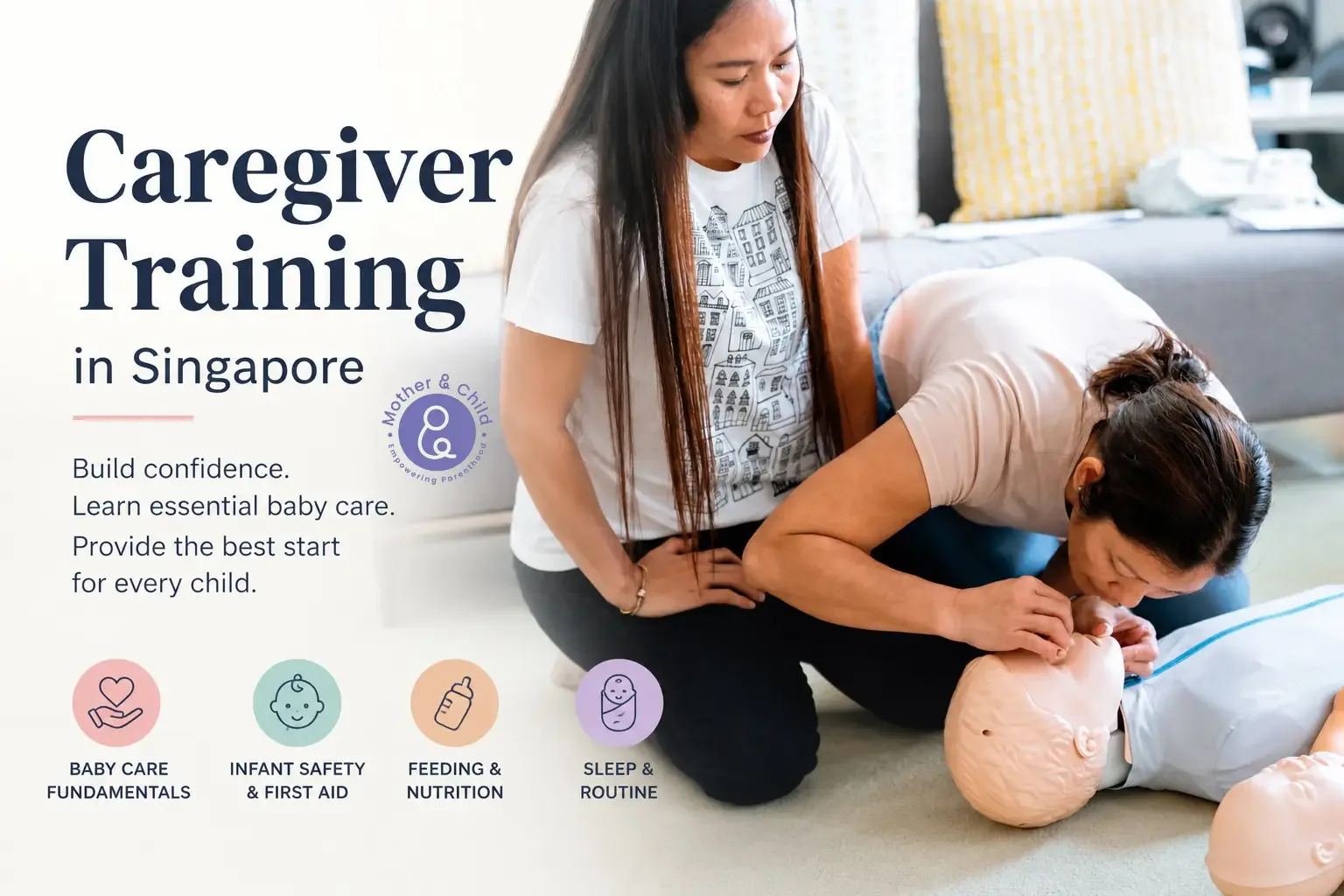
Emergency readiness. Infant and child first aid — including how to respond to choking and airway emergencies, and when and how to perform infant CPR. These are skills best learned hands-on and practised on a manikin, not read from a page, because confidence in a critical moment comes from having actually done it.
Everyday newborn care. Evidence-based guidance on feeding, settling, safe sleep, hygiene, and recognising what's normal versus what needs attention — the things that fill the actual day.
Responsive, respectful caregiving. A thoughtful approach that sees the child beyond the routine: reading cues, responding warmly, and caring in a way that's aligned with how you want your child raised.
The first keeps your child safe when something goes wrong. The second and third shape the thousands of ordinary moments in between.
Our caregiver programmes at Mother & Child
Because supporting the people who support you matters, we've built programmes specifically for caregivers:
First Aid for Helpers — practical, hands-on skills for emergencies, because confidence in critical moments matters.
Cradle Care — evidence-based guidance on newborn care, from feeding to sleep to recognising what's normal.
Mary Poppins (Conscious Nanny Training) — a thoughtful approach to caregiving that emphasises responsiveness, respect, and understanding the child beyond routines.
For families who want a structured starting point, our Essential Caregiver Bundle combines First Aid for Helpers and Cradle Care — covering both emergencies and everyday newborn care in one go.
Because it isn't only about knowing what to do when something goes wrong. It's about knowing what to do every single day.
Getting everyone aligned — helpers and grandparents too
Training works best when it includes everyone in your child's circle of care, not only a hired helper. Grandparents bring love and experience — and also their own era's practices; a simple refresher on current safe-sleep and first-aid guidance can keep well-meant habits from becoming friction. When everyone shares the same baseline, care becomes consistent — and your baby experiences the world the same way whether they're with you, a helper, or grandma.
At the heart of it, this is about trust. And trust grows when there's shared understanding.
Raising a child is never done alone — and it works best when everyone caring for your child feels confident, informed, and aligned.
Frequently Asked Questions
-
Caregiver training equips the people who help raise your child — helpers, nannies and grandparents — with consistent, evidence-based skills in infant first aid, newborn care and responsive caregiving. In Singapore, where care is so often shared, it helps everyone look after your baby safely and in line with how you want your child raised.
-
Yes. Anyone regularly caring for a baby should know how to respond to choking, airway emergencies and other critical situations. These skills are best learned through a hands-on, practical course rather than from reading, so the response is confident and automatic if it's ever needed.
-
First Aid for Helpers focuses on emergencies — the skills needed when something goes wrong. Cradle Care focuses on everyday newborn care, from feeding and sleep to recognising what's normal. Many families choose both, which is why they're offered together as the Essential Caregiver Bundle.
-
Start from shared understanding rather than a list of rules. Aligning everyone on a few core areas — safe sleep, hygiene, feeding and emergency response — through the same training reduces confusion and tension, and means your child receives consistent care from everyone.
-
No. It's valuable for anyone in your child's circle of care, including grandparents and family members. A shared baseline of current, evidence-based guidance helps everyone care confidently and consistently.
-
The Dads Project is Mother & Child's initiative to support fathers. It is made up of Dad Skills, a practical programme on caring for your baby and supporting your partner, and The Dad Room, a counselling-led space run with Alliance Counselling for honest conversations about the realities of fatherhood.