
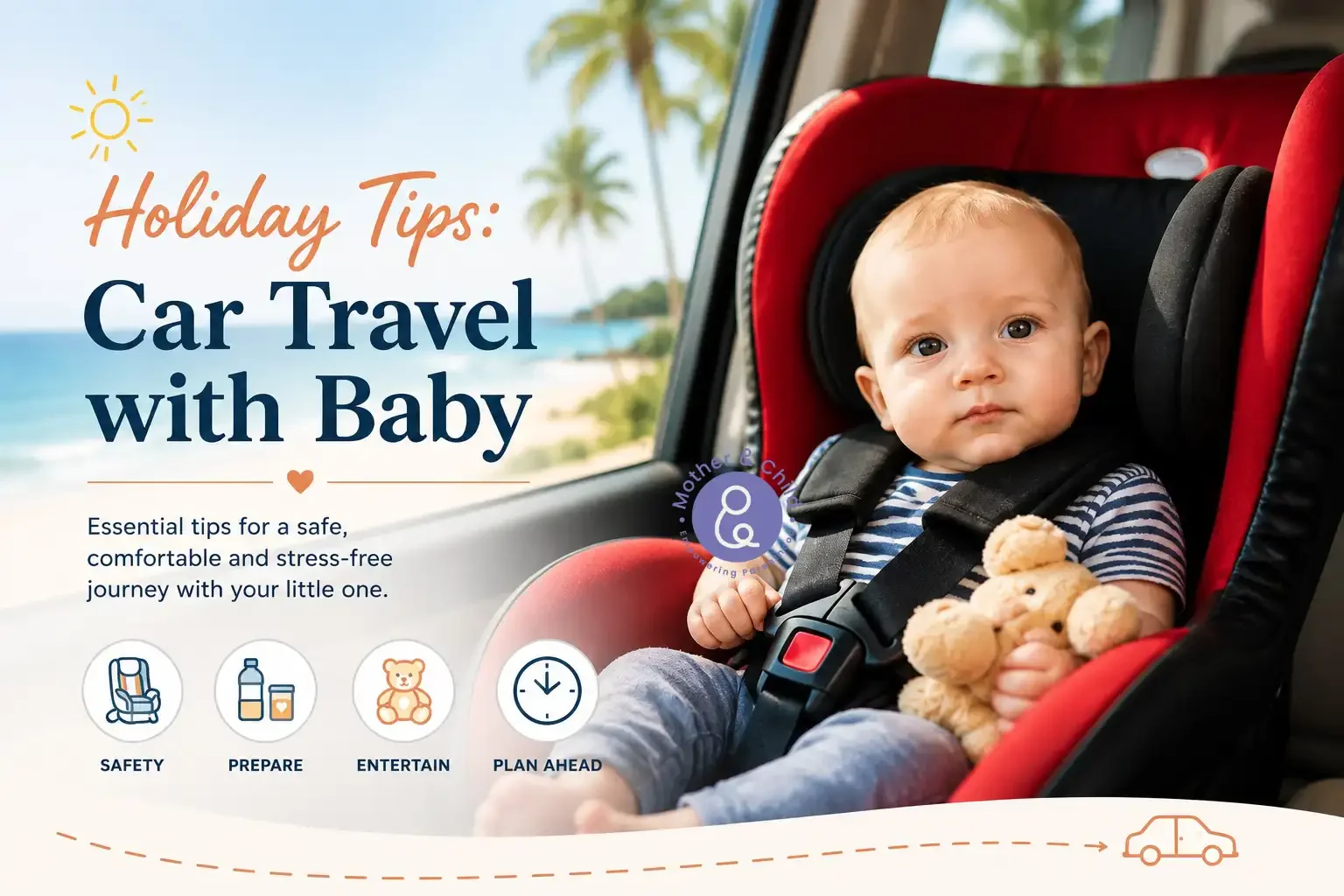
Car Travel With a Baby: How to Keep the Journey Safe and Calm
Car travel with a little one can feel like a strategic mission — except the gear is fluffier and the stakes involve nap schedules. The good news: with the right car seat, a bit of timing, and realistic expectations, most journeys go far more smoothly than you fear. Here's how to make the trip safer and calmer for everyone in the car.
The single most important part isn't the snacks or the playlist. It's how your baby is secured.
Start with the car seat — always
In Singapore, the law is height-based, not age-based: any passenger under 1.35 metres must be secured in an approved child restraint when travelling in a private vehicle. For a baby, that means a properly fitted, rear-facing infant car seat — the safest position for a young child's head, neck and spine.
A few essentials worth getting right:
Use an approved, age-appropriate seat. Look for a current safety standard (such as ECE R129 / i-Size). Your seat's label and manual will tell you.
Rear-facing for as long as the seat allows. Don't rush to turn a baby forward-facing; rear-facing protects them best in a crash.
Never place a rear-facing seat in front of an active airbag. The back seat is the safest place.
Check the fit every time. After buckling, try to pinch the harness webbing at the collarbone — if you can gather fabric, it's too loose. Keep the chest clip at armpit level.
Private-hire isn't exempt. Street-hail taxis are legally exempt from child-restraint rules, but private-hire cars (and your own car) are not — and a seat is far safer regardless of what the law allows. If you're booking, request a seat or bring your own.
If you're unsure your seat is installed correctly, you're in good company — correct installation trips up most parents. Follow the manual, and have it checked if you can. (For the current rules and approved standards, link to the Singapore Police Force and LTA pages.)
The "two-hour rule": don't let baby sit too long
For young babies, it's widely advised not to leave them in a car seat for more than around two hours at a stretch, and to take them out for a break before continuing. In the semi-reclined car-seat position, very young infants can slump in ways that affect their breathing and comfort, so movement breaks matter.
On longer drives, plan stops to take your baby out, let them stretch and lie flat, feed, and have a nappy change. A journey that takes you 30 minutes longer but keeps your baby comfortable is a win.
Time it around naps and feeds
Babies often settle beautifully to the motion of a car — so where you can, drive into a nap. Feed before you leave so you're not setting off with a hungry baby, and try to time longer legs of the trip around their natural sleep windows. A well-fed, sleepy baby is the easiest passenger you'll ever have.
Pack the car like you mean it
Keep the must-haves within arm's reach of the back seat, not buried in the boot:
More nappies and wipes than you think you need, plus a change of clothes (for baby and a spare top for you).
Feeds — bottles or a comfortable spot to nurse at stops.
A muslin, a favourite comfort item, and a window sunshade.
A small bag for rubbish, and hand sanitiser.
When your baby hates the car
Some babies protest the moment the engine starts. A few things that help:
Have an adult sit in the back when possible — sometimes presence is all it takes.
Block the glare with a sunshade; sun in the eyes is a common, fixable trigger.
Try gentle white noise or familiar songs, and check they're not too warm or too cold.
Don't mistake every cry for an emergency — but if your baby is genuinely distressed, pull over safely and tend to them rather than reaching back while driving.
One firm rule: never take your baby out of the seat, or feed them in your arms, while the car is moving. If they need you, stop the car first. No journey is worth that risk.
Look after the driver, too
A calm baby starts with a calm, rested adult. Don't set off exhausted, share the driving on long trips if you can, and build in enough time that you're not rushing. Your steadiness sets the tone for the whole car.
A note for newborns and preterm babies
Very young or premature babies can find the semi-upright car-seat position harder to tolerate, and some need a little extra care on longer journeys. If your baby was born early, is very small, or has any breathing or medical concerns, check with your doctor before a long drive — and keep newborn journeys short and broken up where you can. When in doubt, ask us or your paediatrician.
This is part of our baby travel series — see also our guide to flying with a baby.
Frequently Asked Questions
-
Singapore law requires any passenger under 1.35 metres in height to be secured in an approved child restraint in a private vehicle — it's based on height, not age. For babies, that means a rear-facing infant seat. Street-hail taxis are exempt, but private-hire cars (and your own car) are not.
-
For young babies, it's generally advised to limit time in a car seat to around two hours at a stretch and to take them out for a break before continuing, because the semi-reclined position can affect a young infant's breathing and comfort. On long drives, plan regular stops.
-
Generally yes, if your baby is properly restrained in a suitable rear-facing seat and you break the journey up with stops. For very young, small or premature babies, or any with medical concerns, check with your doctor first and keep journeys short where possible.
-
Time drives around naps and feeds, have an adult sit in the back if possible, use a sunshade, try gentle white noise or familiar songs, and keep the temperature comfortable. Never remove your baby from their seat or feed them in your arms while the car is moving — stop first.
-
The back seat is safest, with the seat rear-facing for a baby. Never put a rear-facing seat in front of an active airbag. Follow your seat's manual for installation, and have the fit checked if you're unsure.