
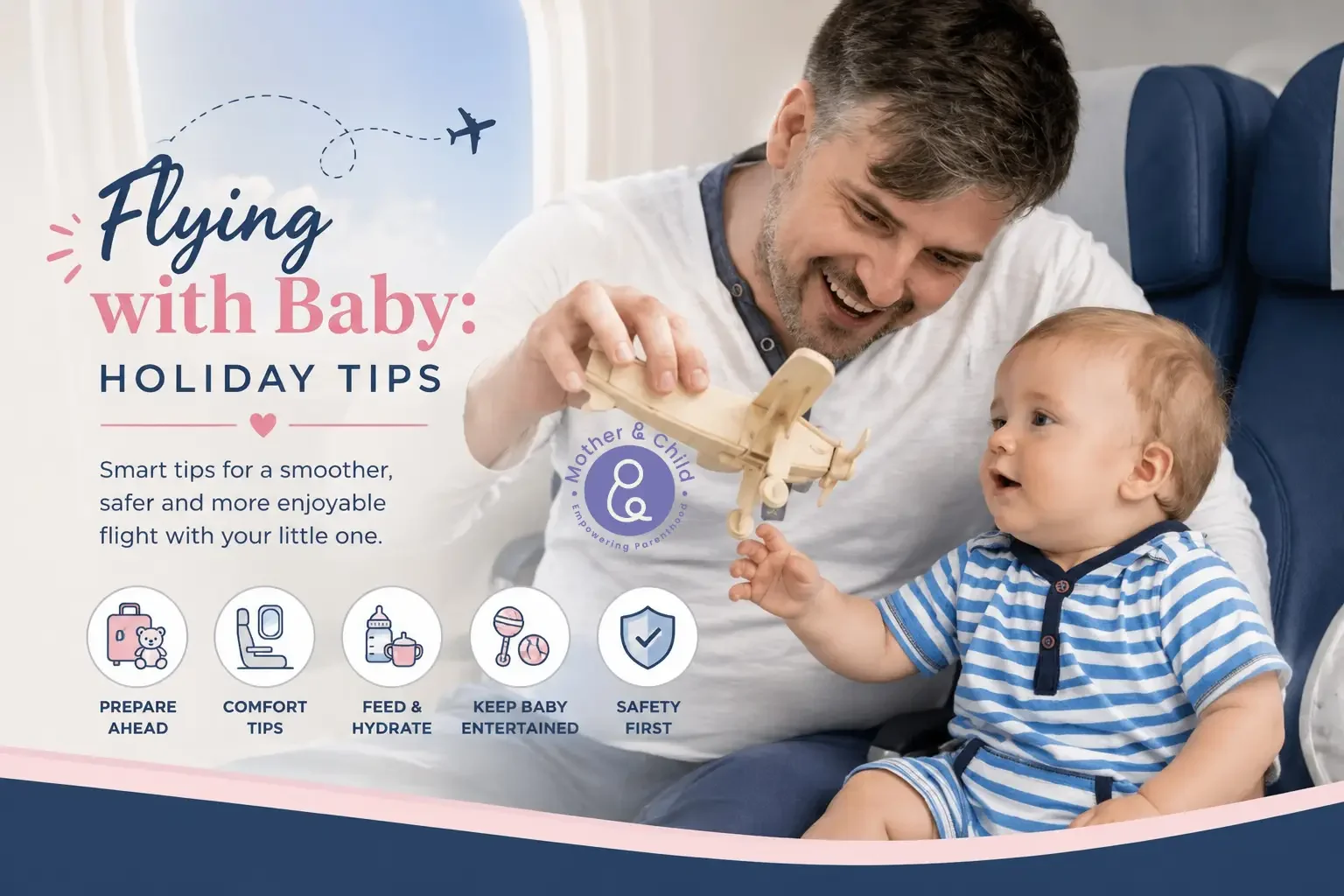
Flying With a Baby: Stress-Free Air Travel Tips
Planning to fly with your baby? Somewhere around booking, most parents think: "Why did I decide travelling with a tiny human was a good idea?"
Never fear. You've handled cluster feeds, growth spurts and nap strikes — you can handle a plane. Here's how to make air travel smoother for everyone (including you).
One quick check before you book: airline age policies for infants vary, and very young or premature babies sometimes need a little extra care when flying. If your baby is a newborn or was born early, check your airline's policy and have a quick word with your doctor first.
1. Pack extra clothes for everyone
Yes, everyone — especially you, Mama. Spilled milk, nappy blow-outs and mystery damp patches happen. A clean, dry outfit (for baby and a spare top for you) is a lifesaver.
2. Bring more nappies than you think
Aim for at least one extra nappy per hour of flight time, plus a few more. Running out at 30,000 feet is no one's idea of festive cheer.
3. Protect those tiny ears
Babies' ears don't "pop" easily. Help relieve pressure during takeoff and landing by offering:
the breast
a bottle
a pacifier or dummy
or even a clean finger to suck on
Sucking and swallowing help equalise the pressure, reducing discomfort and mid-air meltdowns. Timing a feed for takeoff and the start of descent works especially well.
4. Optional treats for fellow passengers
Some parents prepare small goodie bags with earplugs, a wrapped treat and a note "from baby." Here's a sample you can copy:
Hello! My name is ________. I'm _____ weeks/months old, and I'm flying to meet __________ for my very first __________. I might get scared on this flight, or my ears may hurt, and I might cry. These earplugs are for you, just in case. Wishing you wonderful holidays, (Baby's name)
Not necessary — but it charms even the grumpiest seat-mate.
5. Hold baby close during takeoff and landing
The vibration and noise can feel overwhelming. Holding your baby close helps regulate their breathing and keeps them calm.
On long-haul flights, you can often request a bassinet for a small baby at the bulkhead seats — book early, as they're limited. If you're able to book a separate seat, the safest option of all is an approved car seat secured in its own seat.
6. Jet lag: manage expectations
As a rule of thumb, bodies — big and small — adjust to a new time zone by about one hour per day. To help the transition:
Increase activity and daylight during the local daytime.
Keep nights calm, dim and boring.
Even if your baby wakes frequently at first, gently sticking to the day/night pattern helps everyone reset.
7. Maintain baby's usual rhythm
Where you can, keep feeding and nap times similar to home. Familiar rhythms bring comfort in unfamiliar places.
You've got this. And if things go sideways, remember: every adult on that plane used to be a baby too.
This is part of our baby travel series — see also our guide to car travel with a baby.
With love, Dr Mythili and the Mother & Child team
Frequently Asked Questions
-
Airline policies vary, with many allowing infants from around two weeks old, but the right timing depends on your baby. For newborns or babies born early, check your airline's policy and speak with your doctor before booking, as very young infants can need extra care when flying.
-
Offer the breast, a bottle, a pacifier or something clean to suck on during takeoff and landing. Sucking and swallowing help equalise the pressure in your baby's ears, which reduces discomfort and crying.
-
Pack at least one nappy per hour of flight time, plus several extras for delays. Running low mid-flight is stressful and easily avoided.
-
As a rough guide, expect roughly one hour of adjustment per day. Help the shift along by maximising daylight and activity during local daytime and keeping nights dark, calm and quiet, while gently holding the day/night pattern.
-
Many parents fly with a baby on their lap, which is common and allows close comfort during takeoff and landing. On long-haul flights you can often request a bulkhead bassinet for a small baby, and if you book a separate seat, an approved car seat secured in it is the safest option.
-
The Dads Project is Mother & Child's initiative to support fathers. It is made up of Dad Skills, a practical programme on caring for your baby and supporting your partner, and The Dad Room, a counselling-led space run with Alliance Counselling for honest conversations about the realities of fatherhood.