
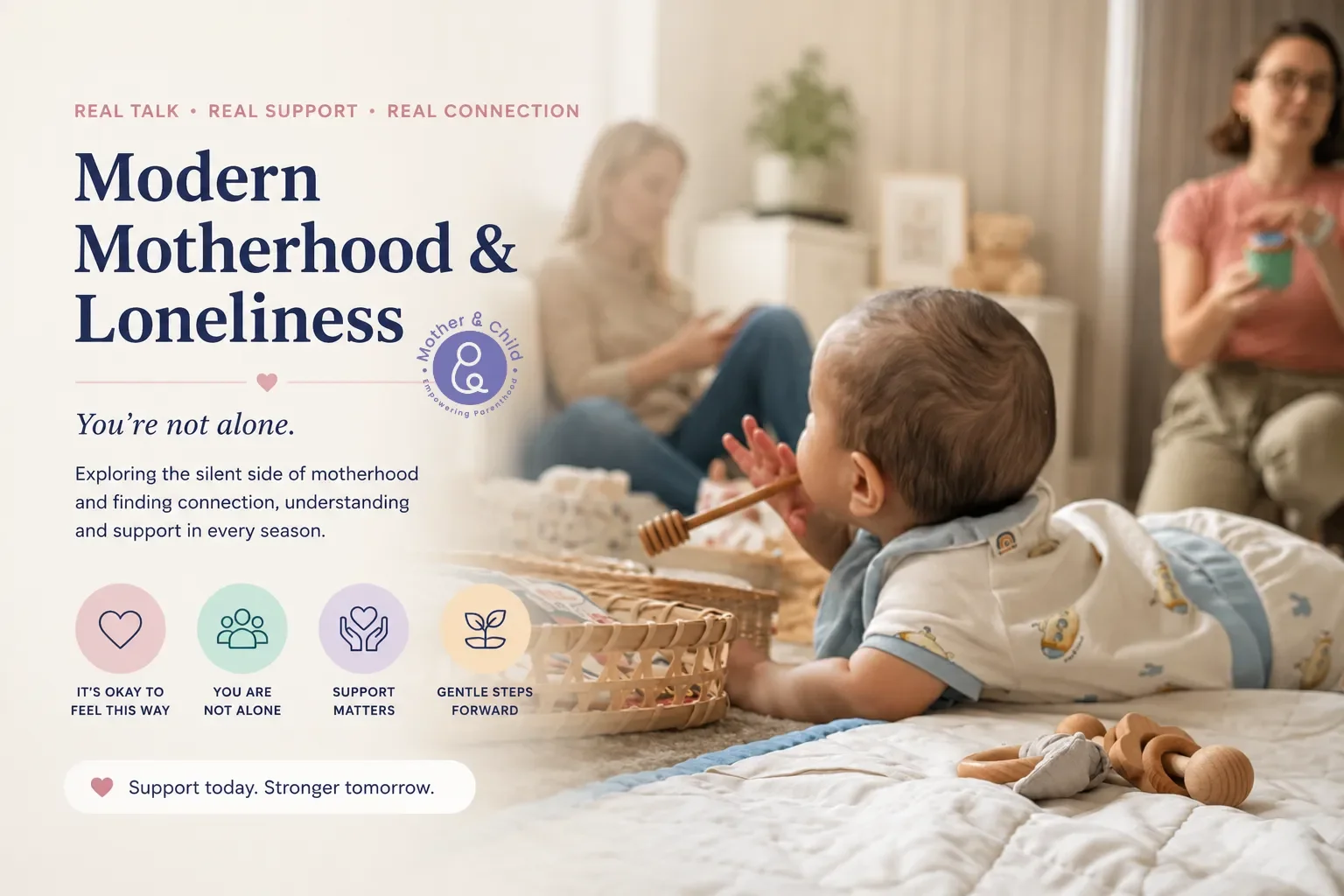
Why Modern Motherhood Feels So Isolating — and How to Find Your Village
Modern motherhood can feel surprisingly lonely — not because anything is wrong with you, but because the built-in "village" that once surrounded new mothers has quietly disappeared. Babies haven't changed; the world we raise them in has. And a village can still be found — sometimes you just have to give yourself permission to go looking for one.
"Where have you been all this time?" It's a question we hear often — usually after a Baby Café session, with a sleeping baby in someone's arms and a look of relief on their face. "I wish I'd found this sooner." They're rarely talking about breastfeeding advice or baby classes. They're talking about finally finding their village.
Motherhood hasn't changed — the way we raise babies has
Babies still wake at night, cry without explanation, and need to be held, fed and comforted. That part is timeless.
What's changed is everything around the baby. Previous generations were often surrounded by grandmothers, sisters, neighbours and friends — people who reassured, encouraged, and simply shared the load. Today, many mothers are raising babies with only their partner, far from extended family, without the community that once came naturally.
The need that village met hasn't gone anywhere. Only the village has.
Why modern mothers feel so alone
Smaller households, families spread across cities and countries, long working hours — modern life has quietly dismantled the everyday closeness that used to hold new parents up. You can be surrounded by people and still feel profoundly alone at 3am with a crying baby and no one to ask, "Is this normal?"
And loneliness in early motherhood isn't a small thing. The postpartum period is one of the biggest transitions a woman will ever go through: hormones fluctuate, sleep disappears, and you're learning to care for a tiny human with no instruction manual. Facing that without support makes an already-hard season harder.
When help doesn't actually feel like support
Sometimes there is help — and it still doesn't meet the need. A confinement nanny or domestic helper can be invaluable. But well-meaning advice, criticism or second-guessing can leave a new mother doubting herself at exactly the moment her confidence is most fragile.
This is part of why aligning everyone in your circle of carematters so much — so support builds a mother up rather than quietly chipping away at her. The point isn't that mothers need more hands. It's that they need the right kind of support.
What new mothers actually need
In the hardest moments, mothers don't need more opinions. They need someone to say, "You're doing okay."
They need people who:
celebrate the small wins,
listen without judgement, and
remind them they're not alone.
That's a different thing from instruction. It's belonging. (We explore this more in our piece on the support new mothers really need.)
How a support group quietly becomes a village
The most moving part is watching complete strangers become one another's lifelines. A mother mentions she's struggling with breastfeeding, and another quietly says, "That was me a few weeks ago." Phone numbers are exchanged. Coffee dates are planned. Babies grow up together.
A support group slowly becomes a village.
At Mother & Child, that has always been the hope. Yes, we teach and answer questions — but some of the most important things happen between parents, not because of us. They happen over coffee, in shared stories, and in the quiet reassurance that someone else truly understands. Our Baby Café meet-ups and parent communities exist for exactly this.
Giving yourself permission to find your village
Perhaps that's why so many mothers ask, "Where have you been all this time?" The truth is, we've been here — waiting for you to find your village.
Because while it still takes a village to raise a child, sometimes the first step is simply giving yourself permission to go and find one. You're allowed to want connection. You're allowed to need it. And you're allowed to reach for it — today.
If you're carrying more than ordinary loneliness — if low mood or anxiety is lingering or deepening — please reach out to your doctor or our team as well. Finding your people helps enormously, and sometimes a little professional support alongside it helps even more.
Frequently Asked Questions
-
Because the built-in community that once surrounded new mothers — extended family, neighbours, close friends nearby — has largely disappeared. Many mothers now raise babies far from family and in smaller households, so support that used to come naturally has to be actively sought out. The loneliness is a feature of modern life, not a personal failing.
-
Yes, very. The postpartum period is a major life transition, and feeling isolated — even when people are around — is extremely common. It doesn't mean you're ungrateful or doing anything wrong. If loneliness tips into persistent low mood or anxiety, it's worth speaking to a professional.
-
It's the idea that raising a child was never meant to be done by one or two people alone. Historically, a wider community of family, friends and neighbours shared the care and the emotional load. The phrase is a reminder that needing support isn't weakness — it's how humans have always raised children.
-
Start small and let connection build: join a new-parent community, drop in to a Baby Café or mum-and-baby meet-up, and stay in touch with the parents you click with. Many lasting friendships begin with one honest "that was me too" conversation. Mother & Child runs both in-person gatherings and online parent communities to help.
-
Practical help and emotional support aren't the same thing. A helper or nanny can ease the workload, but if their advice comes with criticism or second-guessing, it can dent a new mother's confidence rather than build it. What eases loneliness is non-judgemental understanding — feeling seen, not just assisted.